
It was a beautiful spring day in the year of our Lord 1849, during the brief life of the second Roman Republic. A group of soldiers arrive in the Sabina town of Casaprota in search of young men to fight with Garibaldi against the French troops, in defence of the new republic… There follows a brief encounter between the soldiers and the townspeople, between different stories and experiences, and conflicting ideas of being Italian…
Extract in italiano, then in English…
1 ☛ Piazza del Municipio
Stringiamoci a coorte, siam pronti alla morte, siam pronti alla morte, l’Italia chiamò… Appena udirono il canto, capirono di che si trattava. La canzone non era ancora nota, ma il sentimento era fin troppo evidente.
Quattro forti voci maschili: la prima era audace e piena di fiducia; la seconda melodiosa, una voce che avrebbe preferito una ballata a una bella donna in una notte stellata; la terza, traboccante di entusiasmo giovanile, diceva: «Niente ci potrà fermare!» Anche l’ultima era giovanile, ma più delicata, più dolce, era una voce raffinata, come se il cantante assaporasse ogni parola.
E poi, apparvero i soldati, cantando più forte, avanzando su per la collina. Istintivamente i paesani in piazza si strinsero l’uno contro l’altro, gli uomini anziani in piedi davanti alle donne, i bambini che sbirciavano da dietro le gonne delle madri.
– I cappelli! – gridò un bambino. – Guardate i loro cappelli!
I cappelli dei soldati erano molto particolari ma davvero magnifici: cappelli alti con la falda abbassata, ornati con piume di struzzo, un tipo di cappello da palcoscenico lirico.
Ma i soldati non sembravano personaggi di un’opera, sembravano dei briganti con le loro barbe incolte, pistole e pugnali infilati nei cinturoni, e i vestiti coperti di polvere di strada.
Il canto si concluse in un clamoroso «Sì!», e i soldati si fermarono sui gradini che portavano alla chiesa, dove potevano essere al di sopra dei paesani. Uno di loro alzò una mano per chiedere silenzio, un gesto poco necessario perché nessuno si mosse, nessuno parlò, nemmeno i bambini. L’ufficiale, un certo Capitano Angelo Barbieri, detto «il Bolognese», estrasse dalla tasca un proclama e lo srotolò. Giocherellò con la carta per un attimo e i paesani videro che gli mancavano due dita.
Poi, in piedi con le gambe divaricate, il petto in fuori, la voce forte e ferma, il Bolognese cominciò a parlare. – Fratelli! Madri dei patrioti italiani! Dateci i vostri figli! La Repubblica Romana ne ha bisogno!…
La notizia dell’arrivo dei soldati si diffuse rapidamente e interruppe la vita quotidiana nel paese. All’inizio la folla in piazza era piuttosto piccola, ma presto cominciò ad aumentare. Il sarto mise giù le forbici; il falegname, il cesello; i negozianti chiusero i negozi e andarono in fretta in piazza per unirsi alla folla. Nelle case intorno alla piazza alcuni sbirciavano di nascosto dalle finestre del primo piano, e altri, avendo sentito che «erano arrivati i briganti», si chiusero dentro.
– Non si potrebbe essere più orgogliosi che avere un figlio che dà la propria vita alla patria…! – gridò il Bolognese. – È meglio avere figli infelici che codardi! Quando i codardi si sposano, producono altri codardi, generazioni e generazioni di codardi…!
Intimiditi, in silenzio, i paesani ascoltavano il discorso. Erano tutti uguali i discorsi del Bolognese: si appellava al patriottismo, derideva i «codardi» e prometteva che un’Italia unita sarebbe diventata un paese di cui essere orgogliosi. Il Bolognese parlava spesso di socialismo, qualche volta criticava i preti, ma in ogni discorso c’entrava sempre Garibaldi. Aveva sentito gran parte dei discorsi del suo eroe e ne aveva assunto certe espressioni ricorrenti. Le usava in qualunque occasione, ma a ciascuna dava una particolare enfasi.
Nella folla alcuni paesani si stavano arrabbiando, il soldato aveva parlato per quindici minuti senza menzionare Dio o il papa. Poi intervenne una donna con tono provocatorio, – Ma voi siete contro il papa!
Il grido sembrava incoraggiare la folla, altri gridarono. – Sono contro il papa!
– Non siamo contro il papa! – rispose il Bolognese. – Anzi, il papa è sacro. Mazzini ha garantito la sicurezza del papa! – Mise la mano sulla pistola, siamo armati, intendeva dire con quel gesto, siate avvertiti. Questi paesani sono tutti uguali, pensava lui, nonostante i secoli di oppressione del governo pontificio, non si ribellano mai contro il papa e neppure contro i preti. Sono come pecore! Ciò lo faceva arrabbiare ma lo intristiva anche, perché sapeva che solo la repubblica avrebbe potuto porre fine alla loro povertà. – Non siamo contro il papa! – ripeté. – Siamo contro l’ingiustizia! Siamo contro l’oppressione, siamo contro la povertà! Siamo socialisti!… Il socialismo è il sole dell’avvenire
Dietro la porta della chiesa, di nascosto dai soldati, Padre Celestino ascoltava. Non sentiva bene il discorso del soldato, ma ne comprendeva il sentimento. Aveva già sentito dire che i liberali inseguivano e deridevano i suoi confratelli in Romagna, e di come gli sputassero addosso e li bastonassero. È questo ciò che Dio vuole per lui? Essendo arrivato da Viterbo soltanto pochi mesi prima, non conosceva quasi nessuno a Casaprota e non sapeva di chi fidarsi. Ma nonostante il pericolo, sapeva ciò che doveva fare. – Appena partiti i soldati dalla piazza, – diceva a se stesso, – devo andare a mettere in guardia la contessa…
1 ☛ Piazza del Municipio
Stringiamoci a coorte, siam pronti alla morte, siam pronti alla morte, l’Italia chiamò…
As soon as they heard the singing, they knew what it meant. The song was unfamiliar, but the sentiment was all too obvious. Four strong male voices: the first was bold and confident; the second, melodious, a voice that would have preferred singing to a beautiful woman on a starry night. The third was brimful of youthful confidence: Nothing can stop us! it said. The last was also youthful, but softer and sweeter. It was a cultured voice, as if the singer was savouring every syllable.
Then the soldiers appeared, singing louder as they advanced up the hill. Instinctively, the townsfolk in the piazza huddled together, the old men in front of the women, the children peering out from behind their mothers’ skirts.
‘The hats!’ a boy shouted. ‘Look at their hats!’
The soldiers’ hats were very particular and quite magnificent: tall hats with turned-down brims and adorned with ostrich feathers, hats from the operatic stage. But the soldiers were not like characters from an opera, they were more like brigands, with unkempt beards, pistols and daggers jammed into their belts, their clothes caked in dust from the road.
The singing ended in a resounding Si! and the soldiers formed up on the steps in front of the church, where they were above the townsfolk. One held up his hand for silence. An unnecessary gesture, since no one moved and no one spoke, not even the children. The officer, a certain Capitano Angelo Barbieri, known to his comrades as ‘Il Bolognese’, drew a proclamation from his pocket and unrolled it. He fumbled with the paper momentarily and the townsfolk saw he was missing two fingers.
Then, with his feet planted wide apart and his chest out, Il Bolognese began in a voice loud and firm: ‘Brothers! Mothers of patriotic Italians! Give us your sons! The Roman Republic needs them!’
News of the soldiers’ arrival spread quickly through the town and interrupted the daily routine. The crowd in the piazza was rather small to begin with, but soon it grew. The tailor put down his scissors; the carpenter, his chisel; shopkeepers shut their shops and hurried to the piazza. In the houses around the piazza townsfolk peered out from first floor windows, while others, having heard that ‘brigands had arrived’, locked themselves in.
‘One could not be prouder than to have a son who gave his life for his country!’ Il Bolognese shouted. ‘Better to have unhappy sons than to have cowards! When cowards marry they produce more cowards, generations and generations of cowards…!’
Intimidated, the villagers listened to the speech in silence. The speeches of Il Bolognese were all much the same: he appealed to patriotism, he ridiculed ‘cowards’, and he promised a united Italy would be a country to be proud of. He spoke often of socialism, and at times he criticised the priests, but in every speech there was Garibaldi. He’d heard the greater part of his hero’s oratory, and had adopted certain familiar expressions. He would use these on any occasion, but to each, he gave a particular emphasis.
In the crowd a few of the townsfolk were becoming angry. The soldier had been speaking for fifteen minutes without once mentioning God or Pope.
‘But you are against the pope!’ a woman angrily interjected.
Her cry seemed to encourage the crowd, and others shouted, ‘They are against the pope!’
‘We are not against the pope!’ Il Bolognese responded. ‘Indeed, the pope is sacred. Mazzini has guaranteed the safety of the pope!’ He put his hand on his pistol. We are armed, the gesture was intended to say, you are warned. These townsfolk are all the same, he was thinking. Despite centuries of oppression by the papal government, they have never rebelled against the pope, not even against the priests. They are like sheep! It made him angry, but it also made him sad, because he knew that only the republic could put an end to their poverty. ‘We are not against the pope!’ he repeated. ‘We are against injustice! We are against oppression, we are against poverty! We are socialists…! Socialism is the sun of the future…!’
Behind the church door, out of sight of the soldiers, Padre Celestino was listening. He could not hear the soldier’s speech very well, but he understood the sentiment. He’d already heard how the liberals had chased and mocked his brother priests in Romagna, how they’d spat on them and beat them with sticks. Is this what God wanted for him? Having arrived from Viterbo only a few months earlier, he knew almost no-one in Casaprota; he didn’t know whom to trust. But despite the danger, he knew what he had to do. ‘As soon as the soldiers leave the piazza,’ he said to himself, ‘I must go and warn La Contessa’…
The Project in Casaprota…
The project took place in the small town of Casaprota in the Sabina region during a residency with the Palazzo del Gatto. My premise was simple: to write a story set in the town and ‘published’ there. Each section of the story to be posted up in that part of the town (piazza, church, alleyway, gateway, balcony, etc) where the action of the story takes place. The story is then read through a process of ‘walking the story’, a process of marking out the place of Casaprota through an imagined event, reflecting one prominent idea of place as a ‘tapestry of stories’.

Casaprota: the town dates from 934
It was obvious that the story could not be contemporary. It needed to be sufficiently far in the past that there would be no living memory of the period. Some of the events in the long history towards Italian unification took place in this region, and fortunately for me, several concerned the defence in 1849 of the Roman Republic, an impressively liberal republic that survived only six months, but became, at least for a time, highly symbolic. These historical events provided a background for a story that was fictional, but neither unrealistic nor unlikely. I chose the idea of an encounter between locals and soldiers to emphasise their different ideas about place.
 My brief for walking the narrative included that it couldn’t take too long, otherwise people wouldn’t do it; that it couldn’t be confusing; that hopefully the walk would be a loop around the town, and that the map that guides the reader should be easily recognisable. It was most important that the walk began and ended in the social centre of the town, conveniently next to Micarelli’s bar and bar Daff.
So some sites chose themselves: the Piazza del Municipio (1) and the church of San Domenico and San Michele (10), which fronts onto the piazza, and in the centre of the original town (the centro storico), the Palazzo Filippi (5) with its dominant tower, (dating from 1200), was another “must”.

1 & 10 The main piazza from the steps of the church
 I felt I had to use the Palazzo del Gatto (2), which is the home of the SabinARTi resident artists, and is conveniently located halfway between the Piazza del Municipio and the Palazzo Filippi. That turned out to be a small problem, as the building wasn’t constructed until 1891, well after the period in which the story is set. But behind the palazzo there is another, that existed at the time, so that became my focus. I simply dropped the name “Palazzo del Gatto”.
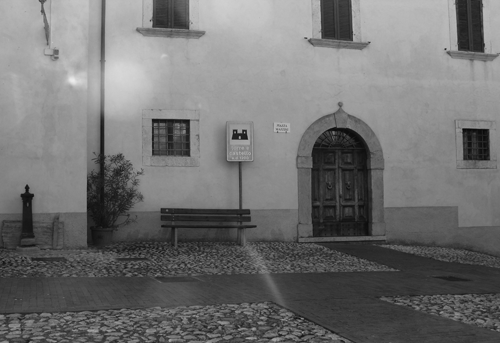 Leaving the piazza we pass the Palazzo del Gatto, head onto the back entrance of the once productive gardens of the Palazzo Filippi. Halfway through the story we find ourselves in the narrow alleys of the centro storico (5 and 6), we head out again to take in the fabulous views for the denouement (7 and 8), and then head back through the centro storico for one short scene (9) before the tale comes to its conclusion on the steps of the main church, again with some superb vistas.
 There is only one completely invented site, an abandoned farm building (there are many in the region) that I have imagined as haunted. My original vision was for haunted stables, and there are ruined stables in the gardens of the Palazzo del Gatto and probably elsewhere, but the building I had to choose could never have been imagined as stables, it is on the side of a hill, so it has become a derelict pigsty, the fictional home of terrified pigs.

The project was launched with a ‘live reading’ by two actors on a balmy Saturday evening in spring before an audience of around forty locals, including lots of kids. The Mayor threw a free pasta dinner for everyone afterwards. The story remained ‘published’ in the town for the three months of summer.
Back home, I completed an English translation and published it with the original. (The Italian is better!) A blog of the project (in both languages) is here.
 linzi murrie